
Key Takeaways
- Ortho-k uses custom rigid lenses you wear overnight to gently reshape the cornea.
- You can see clearly during the day without glasses or contacts.
- The effect isn’t permanent, so they need to be worn nightly.
- Ortho-k is mainly fitted for nearsightedness, or myopia, and sometimes astigmatism.
- Research supports slower myopia progression in children with the use of ortho-k.
- Daily cleaning matters, and tap water should never touch lenses or cases.
Your child comes home from soccer practice with a fogged-up lens and a frame bent sideways. Or maybe you’re the one who spends every swim, every hockey game, every windy hike squinting through the blur because your glasses just don’t cooperate. Our team at Focus West Optometry hears about days like these often.
Orthokeratology, or ortho-k, lenses are custom rigid contact lenses that you wear overnight and gently reshape the cornea while you sleep, so you can see clearly throughout the day without glasses or contacts.
Fun Fact: Cats have a reflective layer called the tapetum lucidum. It’s one reason their eyes can appear to “glow” in the dark and helps them see in low-light conditions.
How Ortho-K Lenses Work
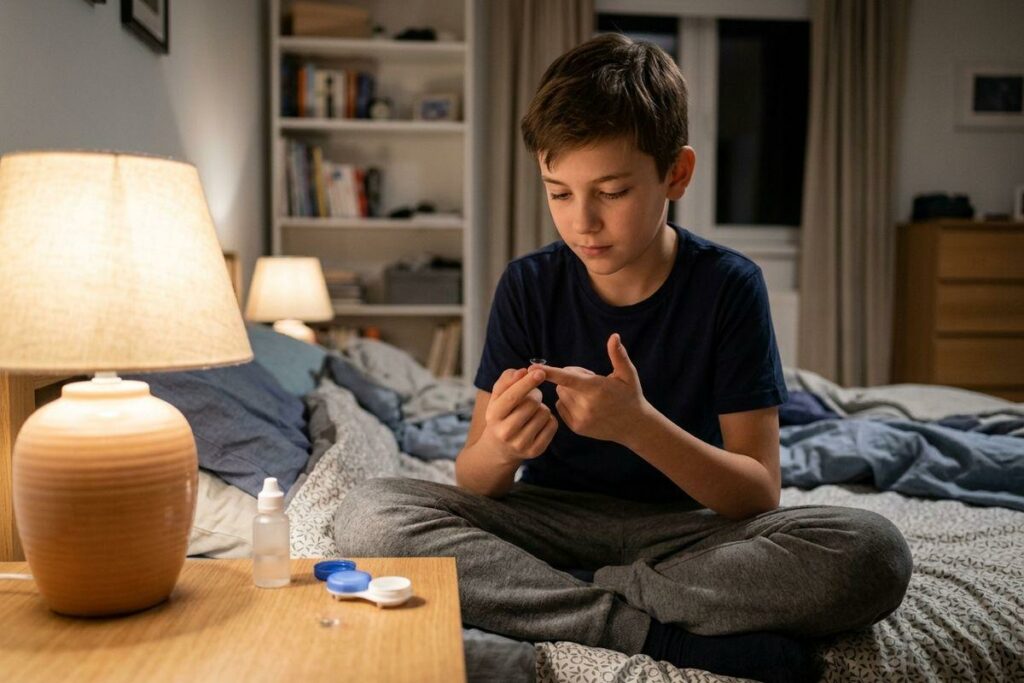
Each lens is made to match the shape of your eye. You put them in at bedtime, sleep, then take them out in the morning. The gentle reshaping happens overnight, and your daytime vision comes without anything on your eyes at all.
No frames sliding down your nose at the gym. No lens drying out during a long afternoon at the computer.
Why the Effect Isn’t Permanent
The cornea gradually returns to its original shape. That’s why nightly wear is part of the plan. Wearing the lenses each night helps maintain the correction, and stopping means your vision goes back to where it started.
Who Ortho-K Might Suit
Ortho-k is used mainly for nearsightedness. It tends to appeal to people whose days don’t leave room for fussing with eyewear, including active kids, teens, and adults who play sports. In some cases, lenses can also be fitted for astigmatism.
Ortho-K and Myopia Control in Children
Research supports slower myopia progression in children who wear ortho-k lenses. As young eyes change, their lenses can be adapted to keep pace, making this an option worth discussing while your child is still growing.
When Ortho-K May Not Be a Fit
Higher prescriptions lower the chances of a successful result. Hygiene habits and a willingness to keep follow-up appointments also factor in, since both are part of wearing the lenses safely.
What to Expect During the Fitting Process
While you are being fitted with ortho-k, you will likely go through with the following:
- An eye exam with corneal mapping to measure the shape of your eye.
- Lens pickup, plus a lesson on handling and care.
- Follow-up visits after your first night and again after the first week.
The mapping step is what makes the lenses yours rather than off-the-shelf. The handling lesson covers insertion, removal, and storage, so you leave knowing what to do at bedtime.
How Long Until Vision Clears
Improvement is gradual, unfolding over days to weeks rather than one night. Some mornings feel sharper than others early on, and a little patience during the adjustment period goes a long way.

Comfort, Safety, and Daily Care
Many people notice a mild awareness of the lenses at first, similar to knowing something is there. That feeling usually settles quickly, often within the first few nights.
Care is a short routine you build into your morning and evening, including:
- Cleaning and disinfecting the lenses daily with the solutions recommended for you.
- Keeping the case clean and replacing it as directed.
- Never letting tap water touch your lenses or your case.
That last point isn’t a small detail. Water and contact lenses don’t mix, and keeping them apart helps protect your eyes.
Pros and Cons to Weigh Before You Decide
On the plus side, ortho-k is surgery-free and reversible, and it gives you glasses-free days for work, sports, and everything in between. On the other hand, the upfront cost is typically higher than that of a pair of glasses, and you can expect more appointments as the fit is adjusted. Nightly wear also needs to stay consistent.
Ortho-K Compared to Laser Surgery
No tissue is removed with ortho-k, and you can stop wearing the lenses at any time. That flexibility matters for children and teens whose vision is still changing, since laser surgery isn’t an option during those years.
Book a Consultation with Focus West Optometry
Ortho-k works well when the fit is built around your eyes and your routine. A conversation with an eye doctor in Signal Hill can help you learn whether overnight lenses suit you or your child, and what the first few weeks would look like.
Contact Focus West Optometry to book an appointment and talk through your options.