
Key Takeaways
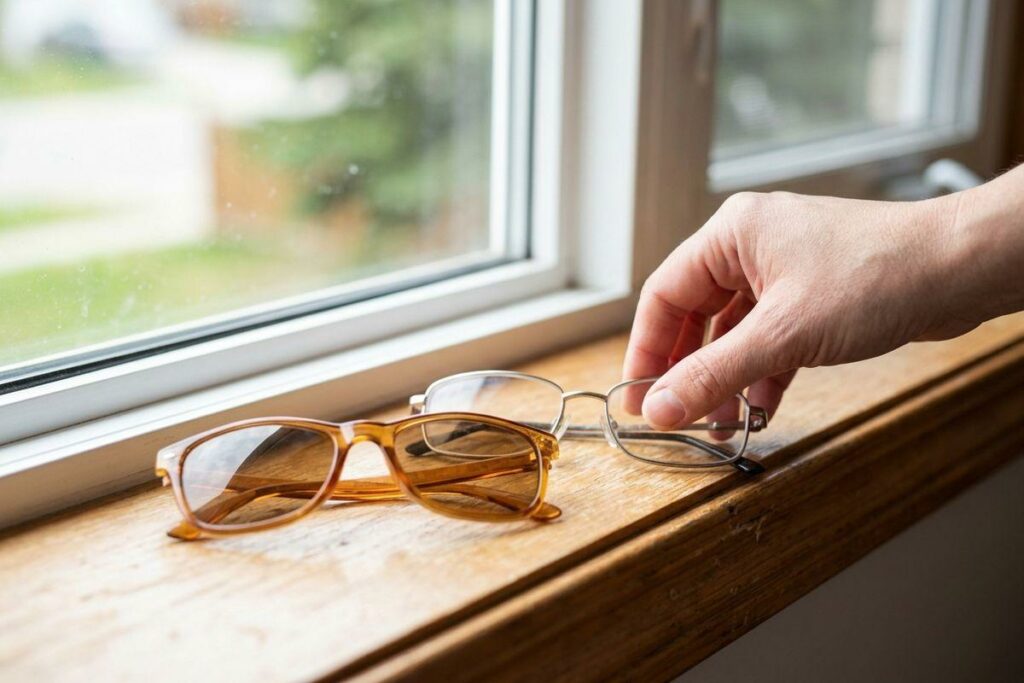
- Night driving glasses usually have yellow or amber tinted lenses and are often sold without a prescription.
- Research on simulated driving found no clear benefit from yellow tints.
- Any tint dims the small amount of light available after dark.
- Clear lenses matched to your current prescription, plus anti-reflective coating, tend to help more.
- Ongoing trouble seeing in low light is worth an eye exam.
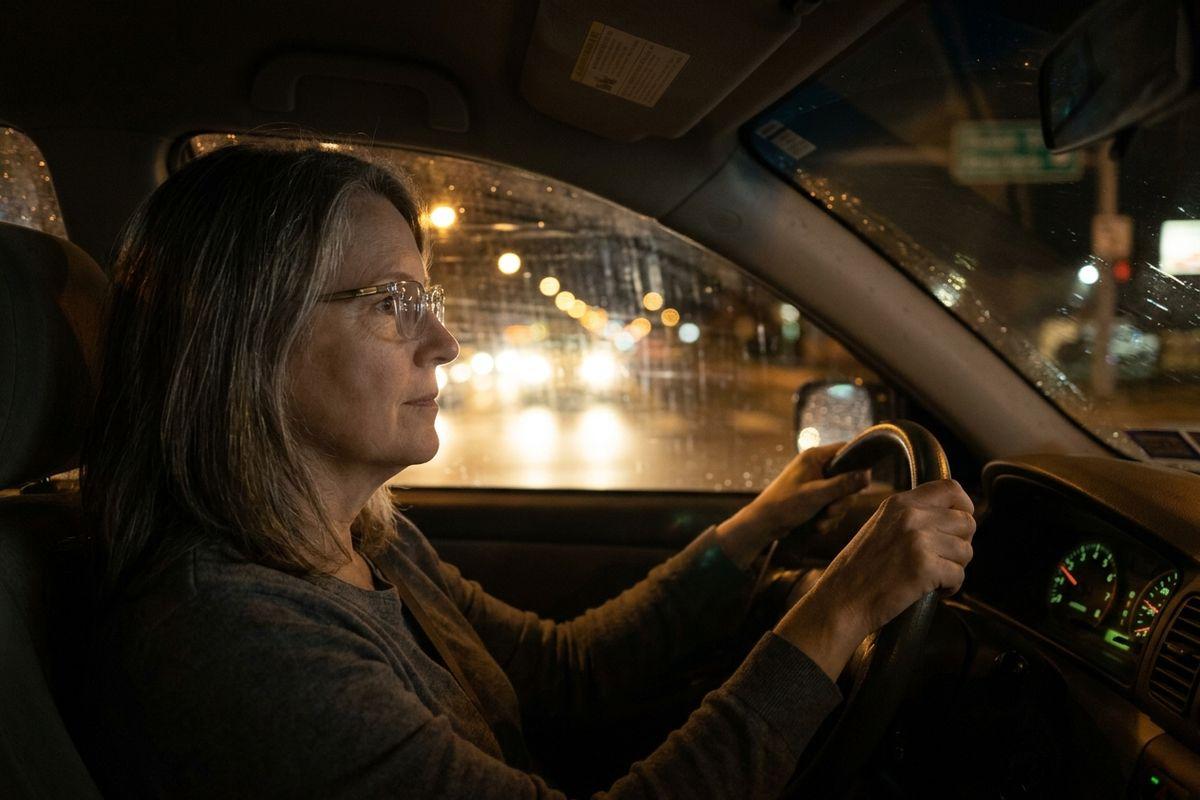
You’re driving home on Sarcee Trail after sunset, and every set of oncoming headlights turns into a bright smear across your windshield. You squint, slow down, and start planning your errands around daylight. Somewhere along the way, an ad for amber tinted night driving glasses catches your eye and promises to fix all of it for $20.
Yellow-tinted night driving glasses have not been shown to improve how well you see after dark, and the tint can actually reduce the light reaching your eyes. What tends to help, according to our team at Focus West Optometry, is clear lenses matched to your current prescription, a clean windshield, and a few small changes to how you drive at night.
Fun Fact: Some nocturnal geckos have pupils that change shape dramatically to help control how much light enters their eyes.
What Are Night Driving Glasses?
These are the yellow- or amber-tinted glasses you see in pharmacy aisles and online listings, sold with claims of cutting glare from headlights and sharpening the edges of the road.
They’re typically sold without a prescription, so one pair fits anyone who picks it up. Some versions add an anti-reflective coating or polarization, features borrowed from lenses designed for bright daylight.
Why the Road Feels Harder to See After Dark
Your pupils widen in low light to let more light in. That also means more headlight glare reaches your eyes, which is part of why one passing truck can leave you blinking.
An out-of-date prescription plays a role too. During the day, your eyes have enough light to compensate, but after dark, the edges of the road and lane markings go soft.
A dusty windshield or a smudged pair of lenses also scatters oncoming light in every direction, turning a single headlight into a wide halo.
How Astigmatism Changes Headlights
If you have astigmatism, points of light stretch into streaks. Oncoming cars can appear surrounded by starbursts and halos, which is a familiar experience for many drivers who first notice it on a dark highway.
What Research Says About Yellow Tinted Lenses
A simulated driving study looked at whether yellow-tinted lenses help drivers at night. It found no clear benefit.
The lenses also didn’t improve how quickly drivers spotted people on the road, which is the situation that matters when someone steps off a curb. The reason is simple enough. Any tint dims light, and at night you’re already working with a limited amount of it.
Lens Options Worth Your Time for Night Driving
Clear lenses matched to your current prescription can do more for night driving than any tint. If your last eye exam was a few years ago, that’s often the piece worth checking first.
An anti-reflective coating can soften the reflections bouncing off your lens surfaces, so headlights behind you don’t show up as ghost images in your line of sight. Save tinted and polarized pairs for daytime sun, where blocking light is the point.
Why Coating Alone Does Little for Uncorrected Eyes
Anti-reflective coating reduces reflections from the surfaces of a lens, so if you don’t need vision correction, there’s little for the coating to build on.
Habits That Support Clearer Night Vision
Clean your lenses and your windshield, inside and out. The inside of a windshield collects a film you rarely notice until headlights hit it.
Dim your dashboard lights so your eyes aren’t pulled between bright glass and a dark road. When a car approaches, shift your gaze toward the right edge of your lane instead of staring into the beams. After you leave a lit parking lot, give your eyes a few minutes to adjust before picking up speed.
When to Book an Eye Exam
Ongoing trouble seeing in low light is called night blindness, and it’s worth having checked rather than working around. Possible reasons include cataracts, a shortfall of vitamin A, or a change in your prescription. An eye doctor in Signal Hill can take a look and talk through what fits your situation.
See the Road More Clearly This Season
Skip the amber lenses and start with an eye exam. Our team at Focus West Optometry can check your current prescription, discuss anti-reflective coating options, and answer your questions about night driving. Book your appointment in Signal Hill today.