

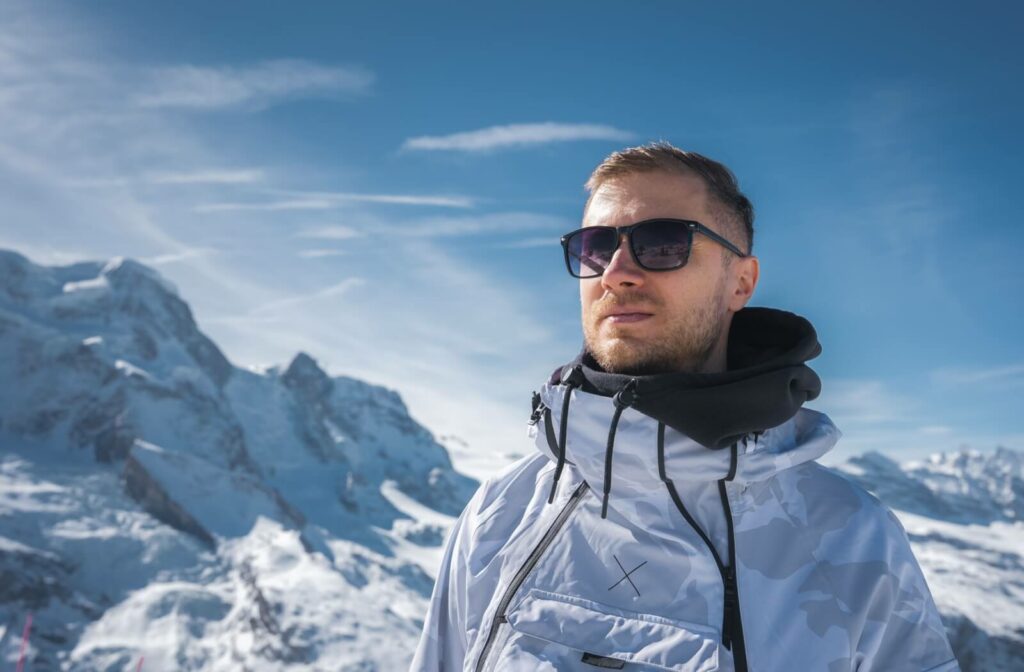
You probably reach for sunscreen on a hot summer day, but do you think about eye protection when the temperature drops? Understanding winter’s risks can help you take the right steps to protect your sight.
Winter sunlight can damage your eyes due to reflections caused by snow and the lower angle of the sun. These factors combine to increase your exposure to harmful UV rays, making it important to wear sunglasses even in the winter.
Why the Winter Sun Is a Threat to Your Eyes
Cold weather can be misleading. Even on a chilly or overcast day, ultraviolet (UV) rays from the sun can reach your eyes. Two key factors make winter sunlight particularly tricky for your vision.
The Snow & Ice Reflection Problem
A fresh blanket of snow may look beautiful, but it also acts like a giant mirror. Snow can reflect a large portion of the sun’s UV rays. This means you get hit with UV exposure from above and below, increasing your overall risk.
Lower Sun Angle
During the winter, the sun sits lower in the sky. This angle means that sunlight can shine more directly into your eyes. This is especially true during a morning or evening drive.
Sun Damage & Your Vision
UV light from the sun can affect your eyes in different ways. Some effects are temporary and cause immediate discomfort. Others can build up over years and impact your long-term vision.
Short-Term Discomfort: Photokeratitis
You can think of photokeratitis as a sunburn of the cornea, the front surface of your eye. Signs of photokeratitis can include:
- Pain or redness in the eyes
- Blurry vision
- Watery eyes
- A gritty feeling, like sand is in your eye
- Sensitivity to light
Long-Term Health Concerns
Repeated, unprotected exposure to the sun throughout your life can increase your risk for several serious eye conditions. These conditions often develop slowly without early symptoms.
- Cataracts: A gradual clouding of the eye’s natural lens that blurs vision.
- Macular Degeneration: Damage to the part of your eye that affects sharp, central vision.
- Pterygium: A non-cancerous growth on the white part of the eye that can interfere with vision.

Choose the Right Sunglasses for Winter Protection
A good pair of sunglasses is an important tool for protecting your eye health. Sunglasses help protect your eyes by blocking harmful UV rays and reducing glare. When you choose winter eyewear, make sure it has the right features.
Look for 100% UV Protection
The most important feature to look for is a label that says “100% protection against UVA & UVB” or “UV400.” Our guide on what to consider when purchasing sunglasses can help you make an informed choice. Remember that the darkness of the lens does not indicate the level of UV protection. Always check the tag to be certain.
Consider Polarized Lenses for Glare
Polarized lenses have a filter that blocks reflected light from surfaces like snow, ice, and wet roads. This reduces eye strain and can make your vision clearer. It also makes your outdoor winter activities more comfortable.
Fun Fact: Mantis shrimp take the prize for the most extraordinary eyes on Earth. They can see 12 colours (humans see only 3). They even detect ultraviolet and polarized light—meaning they see a version of the world no human could ever imagine.
Protect Your Whole Family’s Eyes This Winter
Everyone in the family, from the youngest to the oldest, needs proper eye protection from the winter sun. UV damage is cumulative over your lifetime. Good habits should start early and continue for years to come.
For Children & Teens
A child’s eyes are still developing, and they’re sensitive to UV exposure. That’s why it’s important to help children build good habits, like wearing sunglasses. A wide-brimmed hat also provides good protection.
For Adults & Seniors
The risks of cataracts and macular degeneration increase with age. Since UV exposure is a contributing factor, wearing protective sunglasses is among the most simple and effective steps you can take.
Talk to Your Eye Doctor in Signal Hill
Your eyes are unique, and your vision needs are specific to you. An annual comprehensive eye exam is a perfect opportunity to discuss your lifestyle and sun protection. Your optometrist can check for any signs of sun-related damage and recommend lenses for your needs.
As your eye doctor in Signal Hill, our team at Focus West Optometry can help you find a personalized approach to keep your eyes healthy. So book an appointment today to discuss your vision needs a professional!