

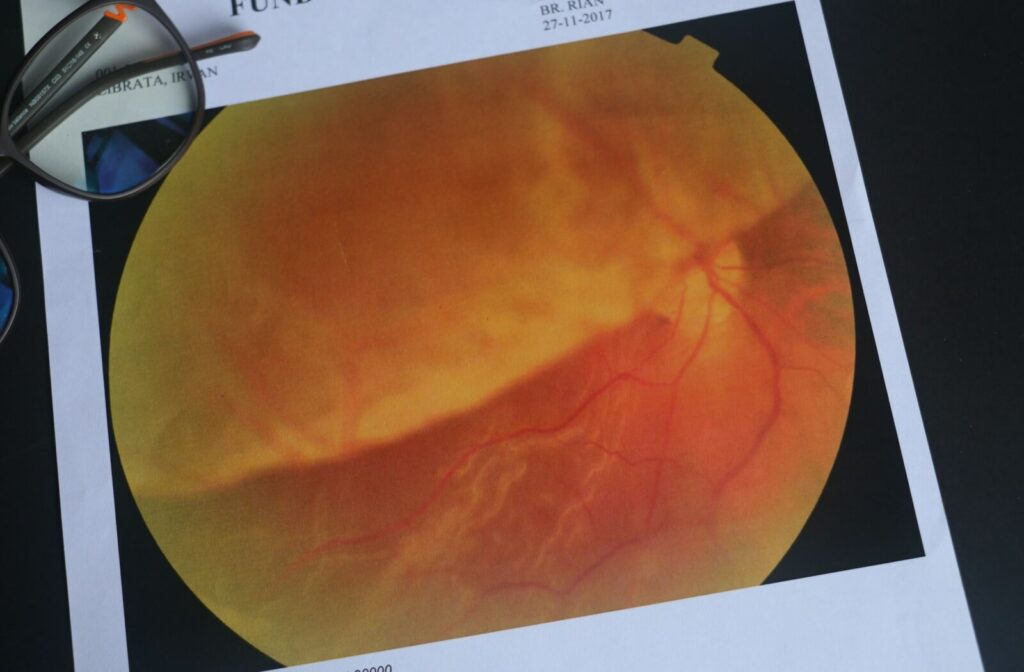
An eye exam gives our team at Focus West Optometry a clear view of your eye health. Digital retinal imaging is an innovative tool that our team uses to capture a detailed picture of the back of your eye, including the retina, optic nerve, and blood vessels, during a comprehensive eye exam.
This technology creates a permanent digital photo that helps your eye doctor track and monitor your eye health over time. It provides a baseline image that can be compared at each visit, forming a crucial part of our eye care technology to spot even small changes.
Fun Fact: Frogs use their eyes not just for seeing but for helping them eat! When a frog swallows food, it pushes its eyes down into its mouth to help force the food toward its stomach — a strange but effective trick.
How Digital Retinal Imaging Protects Your Sight and Eyes
A simple picture can tell your eye doctor a lot about what’s happening inside your eye. Retinal imaging is a key tool for detecting eye conditions early, often before you notice any symptoms. The images can also offer clues about your overall wellness, like showing signs of diabetes before you have symptoms.
Eye Conditions Detected with Retinal Images
Your eye doctor can use these images to check for signs of various conditions. They can help with the early detection of issues such as:
- Diabetic retinopathy
- Glaucoma
- Age-related macular degeneration
- Retinal detachment or tears
- High blood pressure changes
A Window to Your Overall Wellness
The health of the blood vessels in your eyes can reflect the health of blood vessels throughout your body. Your eye doctor can spot signs related to conditions like diabetes and hypertension. Your eye doctor’s ability to detect indicators of your overall health makes your eye exam an essential part of your general health care.
What to Expect During Your Appointment
The process is quick, comfortable, and painless. Knowing what happens step-by-step can help you feel at ease during your visit with an eye doctor.
Prepare for Your Test
In some cases, your eye doctor may use drops to dilate your pupils. This dilation widens the opening at the back of your eye, allowing for a clearer, more complete picture. If your pupils are dilated, your vision may be blurry for a few hours, so it’s a good idea to:
- Arrange for someone to drive you home
- Bring sunglasses for sensitivity to light afterward
Simple Imaging Process
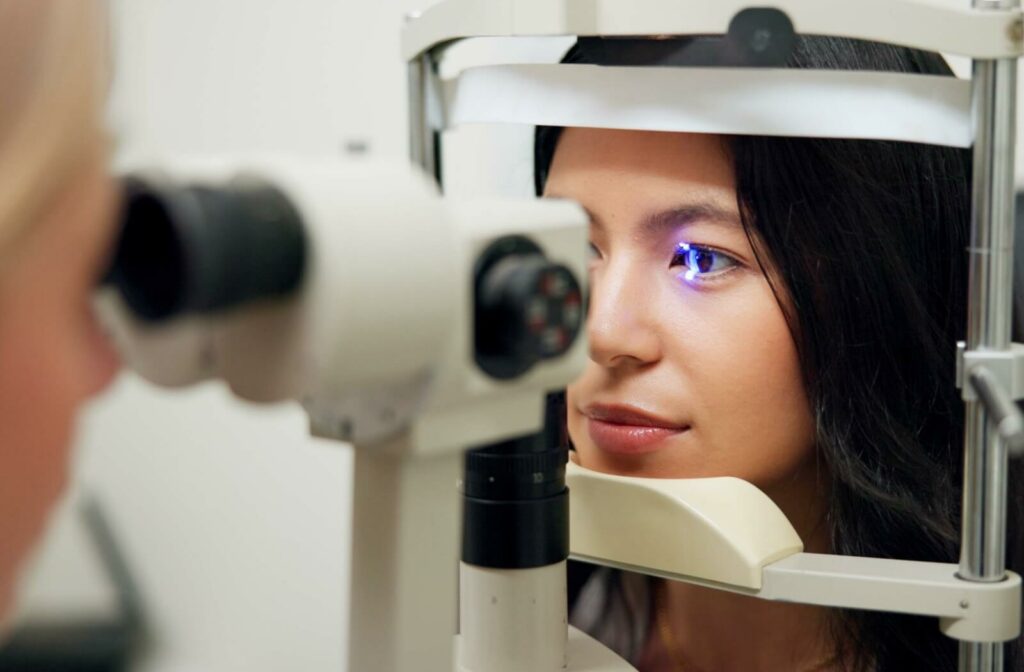
The test itself only takes a few minutes. You’ll sit comfortably and rest your chin and forehead on a support to keep your head still. You just need to look at a point of light while a camera takes a picture, you’ll see a brief flash, and then it’s done.
After the Test Is Complete
If your eyes weren’t dilated, you can go about your day as usual. If they were, your vision will gradually return to normal over a few hours. Your eye doctor can review the images with you, explain what they see, and offer personalized advice on any next steps.
Digital Retinal Imaging and Your Regular Eye Exam
You might have questions about how retinal imaging fits into your regular check-up. As part of a comprehensive eye exam, it’s a diagnostic tool that works alongside traditional tests. This combination can give your doctor a complete picture of your eye health.
Imaging and Dilation
Digital retinal imaging and pupil dilation are often partners in a thorough eye exam. Dilation opens the pupil, allowing a clearer view of your eye, while the retinal image captures that view in a detailed photograph. But you might not always need pupil dilation.
Is This Test Necessary for You?
Your eye doctor may recommend retinal imaging based on your unique health needs. It’s advantageous if you have a health condition, like diabetes or a family history of eye disease, making it a key component of eye disease diagnosis and management.
Common Questions About Retinal Imaging
It’s natural to have questions about any health-related test. Here are answers to a few common questions about digital retinal imaging. We want to help you feel informed about your care.
Does the Test Have Any Risks?
Standard retinal imaging is a safe procedure with no known risks. The technology uses a camera and a flash, similar to a regular photograph. It’s a noninvasive way to get a clear view of the inside of your eyes.
Talk to Your Eye Doctor About Retinal Imaging
Digital retinal imaging is one of the many ways your eye doctor can help protect your vision and monitor your health. It gives a detailed view of your eye that isn’t possible with a standard exam alone.
If you have more questions or want to see if this technology is right for you, book an appointment with the team at Focus West Optometry today.